Your Guide to Fall Annuals
As we start to experience shorter days and fall-like temperatures, you may be wondering when the right time is to bring home some fall annuals or a mum for your front step. Today, we’re covering the basics of switching over to fall annuals.
Transitioning to Fall Annuals:
The ideal time to transition from spring/summer annuals to fall annuals in our area (Zone 4) is from late August to mid-September.
- Why this timeframe? By late August, many summer annuals might be starting to look leggy, tired, or have reduced blooming due to the heat and stress of the summer. Switching annuals out allows you to bring in vibrant fall color and replace plants that will be the most sensitive to the cold.
- What’s available? Our fall annual offering includes:
- Mixed containers
- Mums (hardy and non-hardy)
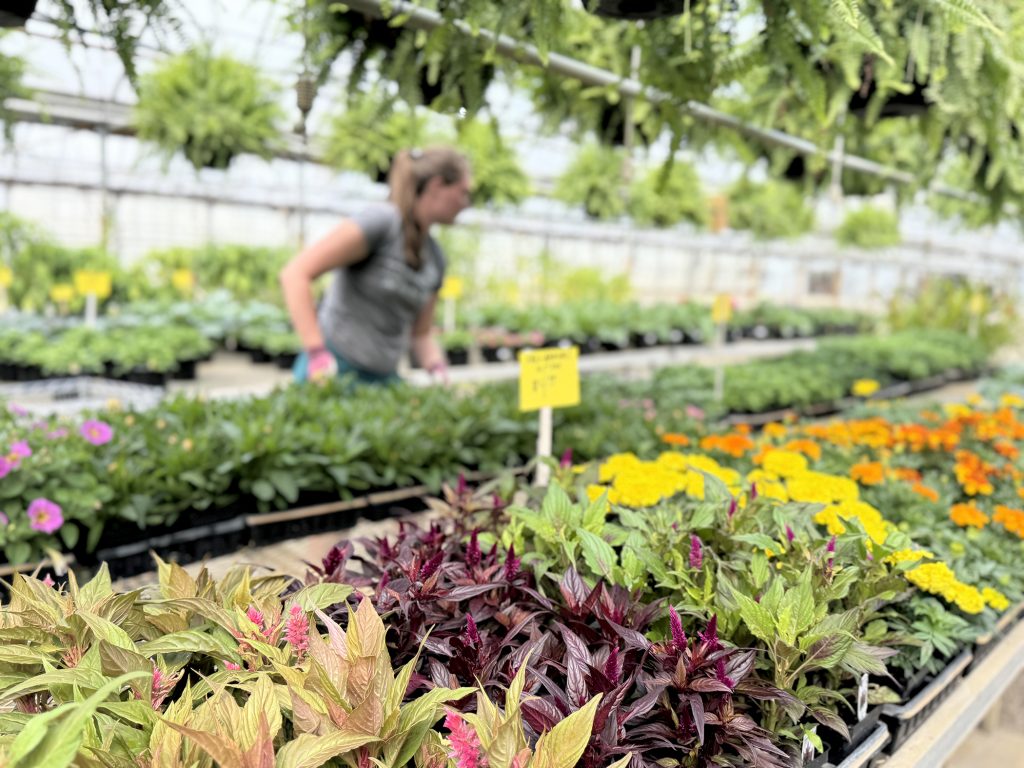
- Calibrachoa, celosia, echinacea, gaillardia, coral bells, shasta daisy, marigolds, cabbage, kale, millet, rubrum grass, petunia, rudbeckia, scabiosa, zinnia, sunflowers, ornamental peppers, petunias and more.. all in a beautiful fall color wave!
- Do I need to switch out all of my spring annuals? We are intentional about the annuals we sell in the fall, with our offering geared toward cooler temperatures. There is no difference between the annual plants we carry in the spring vs the ones we carry in the fall. The benefit of replacing old annuals is simply adding in fall color, replacing plants that have become leggy, or have stopped blooming. It’s also a great time to replace plants that are suspectable to damage from colder temperatures.
- Spring/summer annuals that are the most sensitive to cold weather: A light frost will likely do in these popular spring annuals: begonias, coleus, impatiens, lantana, vinca, verbena, sweet potato vine and tropical plants such as hibiscus and dipladenia. These are plants you should consider swapping out for fall annuals if you are looking to keep a portion of your summer containers.
- How long will fall annuals last? The fall annuals available at Colorful Seasons should last through the end of September but the timeline will largely depend on the weather and care they receive! Some of the annuals we carry can even tolerate a light frost (32−29∘F).
- When can we expect first light frost? Late September to early October is typically when Zone 4 experiences our first frost with a hard freeze in mid-October.
Mums:
Are mums perennial or annual? Both!
Many of the plants we sell as “fall annuals” you will also see available listed as “perennial” in our nursery, including mums! Items we sell as “perennials” are strong enough to last through a Minnesota winter and return in the spring. The varieties we carry and market as “fall annuals” don’t have a strong enough root system to survive our cold winter and therefore should be planted as an annual, with no expectation of the plant returning in the spring.
Be mindful of which you are purchasing! At Colorful Seasons mums that are hardy will tagged with care information and marked as “hardy” or perennial. Sometimes big box stores don’t make this distinction, so it is important to be mindful of what type you are purchasing.
Tips for Mums:
- Purchase from a local nursery or garden center! Dedicated care provided means a healthy, longer-lasting plant, fit for our zone.
- It’s hard to resist.. but try to purchase a mum that is full of blooms that haven’t yet shown color! This will ensure vibrant color when other plants are starting to fade.
- Mums can bloom for 4-8 weeks, depending on weather and care.
- Water your mum when the top inch or two of soil is dry. Then, give your mum a good soak, watering from the roots is ideal.
- Mums enjoy full sun! BUT, temperatures and the intensity of the sun in late August and early September can be more harmful than helpful. If temperatures are high consider pulling your mum inside or to a cooler area until the heat has passed. When the days are cooler, place your mum in full sun.