
Gardening and yard clean up timeline for Central Minnesota
When can I..
For Minnesota, April is a month of warming sun… and late season snowstorms. Leaving many of us feeling confused over what seasons it really is. This time of year, we get asked many “When can I..” questions. So today we’re answering some of the most common spring-timeline questions. Most of these answers depend on our last frost date, which is unpredictable! However, for this article and planning purposes we are using central Minnesota’s average date which is May 10th.
When can I start yard clean up?
After the last frost is the best time for some pruning (see more below) and perennial bed clean up. Here are some indicators that it may be time:
– There is no snow (or no significant snow in the forecast)
– Yard is frost free
– Ground is dry
– Temperatures are consistently around 50 degrees
When can I rake my yard?
It’s important not to damage your lawn before it’s awake from winter. Wait until the ground is thawed (and no longer wet and muddy) and then you can start lightly raking. We would consider a light rake as removing leaves, debris or snow mold, being mindful not to damage your lawn while it’s still in a delicate state. Late April is typically when central Minnesota sees the ground thaw, through this timeline varies. Check yourself before getting started; here are some tips:
– Thawed ground has some spring or give to it.
– Thawed soil feels soft and will crumble.
– Try digging a small hole, if it is difficult to dig the ground has likely not thawed.
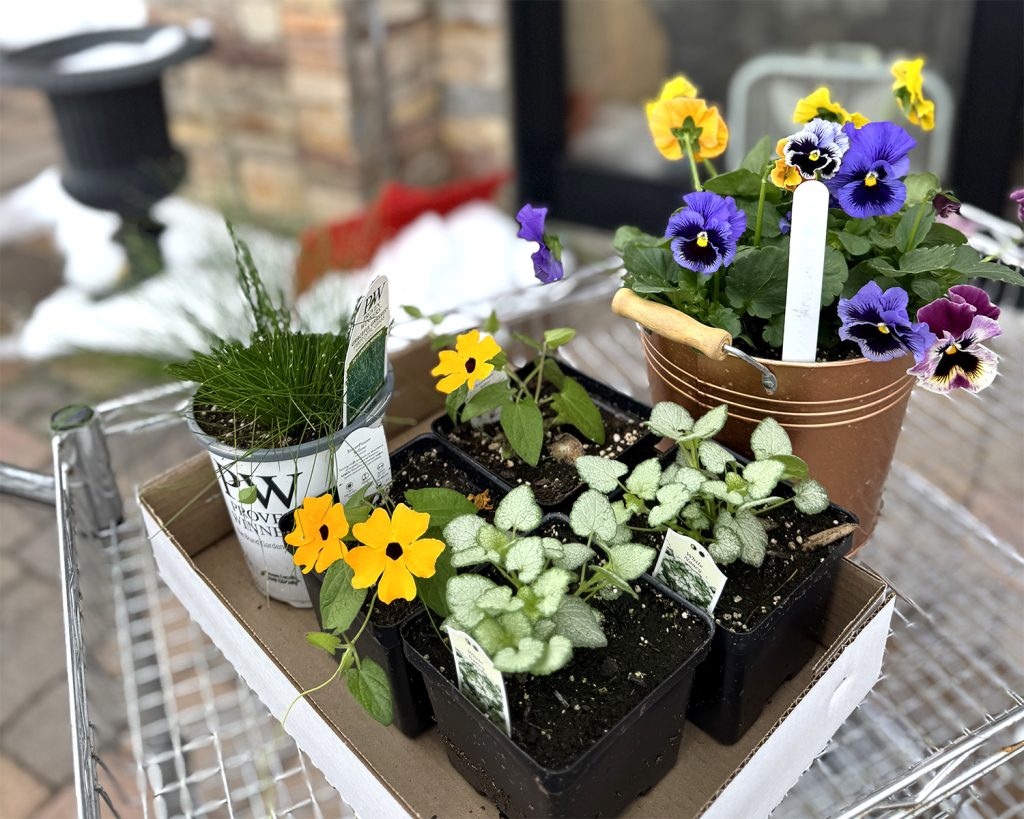
When can I bring my Pansy bowls outside?
It’s hard to believe but Pansies are already available in our greenhouse! They are the first spring annual we make available each year. They can be placed outside four – six weeks BEFORE the last frost date. Hardy Pansies can even handle a light snow. This makes April a great time to add some color to your front step with Pansies.
When can I plant seed potatoes and onion sets?
The soil must be tillable to plant seed potatoes and onion sets. Typically, in central Minnesota we see this time around late April to early May. When daytime temperatures are consistently 50 degrees (or above) is the best indicator of the correct time.
When can I start my seeds indoors?
You can start seeds indoors 6-8 weeks before the last expected frost date (May 10th). This means as early as mid-March for most plants. If you haven’t started yet there is still plenty of time! Tomatoes and peppers are staples of most vegetable gardeners, and these plants don’t need to be started before April.
Here’s a helpful tip: Using a fan on low speed will mimic wind. This will strengthen the stems of your starters, helping to transition them to the outdoors.
When can I bring my starters outdoors?
Plants started indoors should be hardened off. Hardening off is a two-week period where you control exposure to the elements to ensure seedlings aren’t shocked by the sun, wind or the change in temperature before planting them in the ground. After this period place them in a sunny area until you are ready to put them in your garden. It is safe to plant seedlings in the ground after the last frost. We recommend waiting until mid – late May.
More information on Hardening: Starting seeds indoors | UMN Extension
When can I plant my annuals?
It is generally safe to plant annuals after the last frost. While there is still a 50% chance of frost after May 10th, many in the area choose this date or Mother’s Day weekend as a starting point for purchasing annuals.
To be safe, plan for how you will cover your annuals in case of a later frost. To cover annuals, use an old bed sheet, drop cloth, or medium-weight fabric (no plastic!) for vulnerable plants. Drape loosely over the plants to allow for air circulation. Leaving space between your covering material and the plant. Secure your cover to the ground with stakes or rocks.
Extra: Check out our list 2025 Annuals here.
When can I start pruning:
Pruning is a great practice that helps to control growth, rejuvenate old and overgrown shrubs and even encourage flowering. However, there is a timeline for this practice.
Popular shrubs that you can prune in the spring would include Spirea, Potentilla, Dogwood, Ninebark, Hydrangeas and Weigela. You are free to prune these until you see new growth starting.
Avoid pruning shrubs that bloom early in the spring such as Lilacs, Azaleas, Rhododendrons and Forsythia. Pruning them will remove the flowering buds that were already set. Plan to prune these shrubs in the spring after they have bloomed for the year.
Most trees should be pruned late in the fall, after a killing frost, when the tree is dormant for the winter.
For specifics check out this guide: Pruning trees and shrubs | UMN Extension