
Poinsettia Care Guide
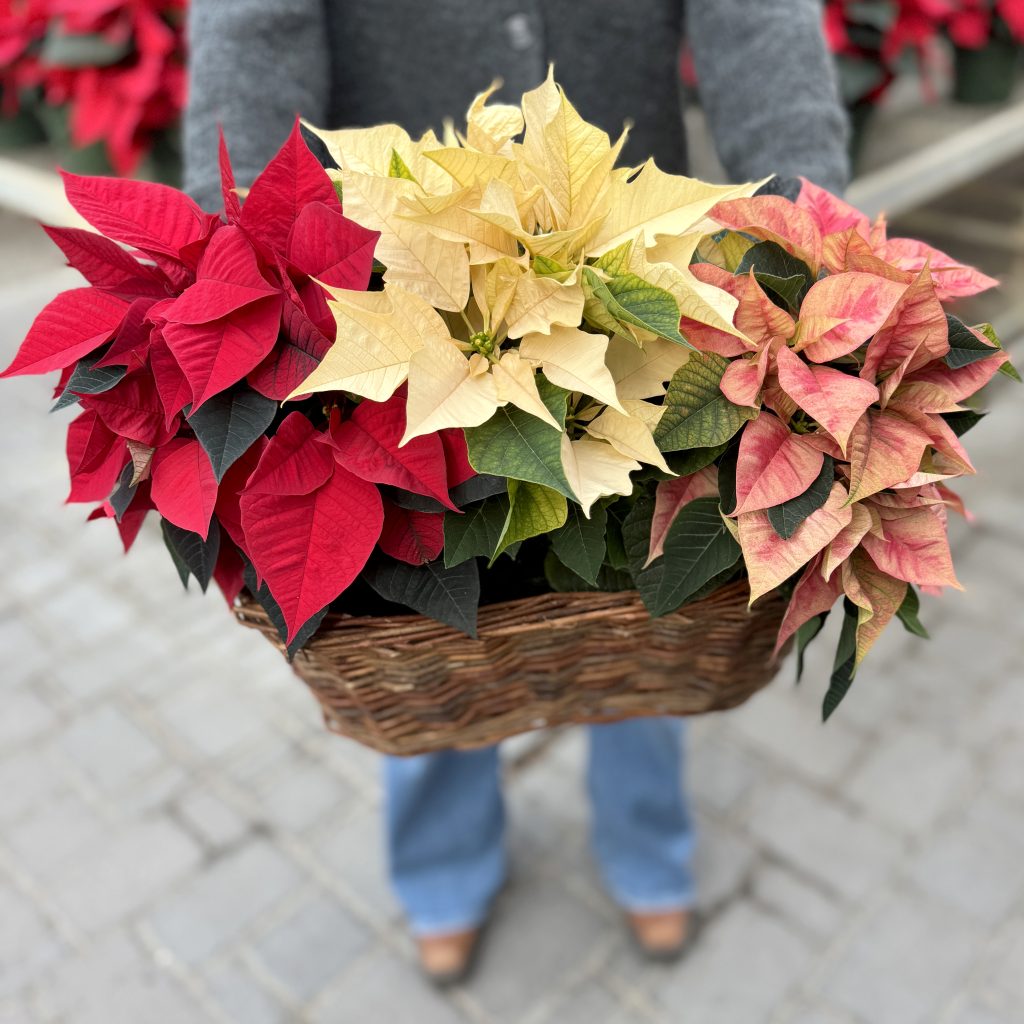
The poinsettia (Euphorbia pulcherrima) is the quintessential holiday plant, known for its vibrant red, white, or pink bracts.* Bracts are a modified leaf. The overtop color your poinsettia develops is actually the leaf (or bract) color rather than the flower.
To keep your poinsettia looking best beyond Christmas morning, follow this simple care guide.
Origin Story:
The poinsettia was native to Mexico and Central America, where it grows as a perennial shrub that can reach heights of 10-15 feet.
Its association with Christmas comes from a Mexican legend about a poor girl who could only offer a humble bouquet of weeds to place at the church’s nativity scene. Miraculously, these weeds bloomed into the beautiful red flowers we now know as poinsettias.
Light, Water, and Temperature:
Poinsettias thrive indoors during the winter when their environmental needs are met.
- ☀️ Light: Place your poinsettia near a sunny window where it can receive bright, indirect natural light. An east, south, or west-facing window works best. Avoid placing it where it will touch cold window panes or be in direct, harsh afternoon sun.
- 💧 Watering: The most common cause of poinsettia failure is improper watering.
- Water thoroughly only when the surface of the soil feels dry to the touch.
- Allow the excess water to drain completely—never let the plant sit in a saucer full of water, as this leads to root rot. If your plant is wrapped in decorative foil, make sure to poke a hole in the bottom of the foil or remove the plant before watering and place it back after it has drained.
- 🌡️ Temperature: Poinsettias prefer the same indoor temperatures that most people find comfortable.
- Aim for an ideal daytime temperature between 65 – 70.
- Protect the plant from drafty windows, vents, and radiators, and ensure nighttime temperatures don’t drop below 60.
⏳ How Long Should it Last? (And Should I Fertilize?)
With proper care, a healthy poinsettia should stay vibrant and colorful for 4 to 8 weeks, often lasting well into January or even February!
- Fertilization: Do not fertilize your poinsettia while it is in bloom (during the holiday season). The plant is typically grown with enough nutrients to last its display life. If you decide to keep the plant year-round, you can begin a regular fertilization schedule in the spring and summer.
Tip for Bringing it Home: When transporting your poinsettia from our garden center to your home, make sure it is completely wrapped or sleeved. Exposure to cold air, even for a few minutes, can cause the leaves to drop prematurely. Never leave your poinsettia in a cold car, even if you just plan to run a few quick errands. Make the garden center you last stop before heading home with your plant.
Visit our Facebook to view some of the beautiful poinsettias we have available this year!