It’s Time… To Fertilize
It’s Time… To Fertilize
To keep our plants looking (and producing!) their best, maintenance is required! An important part of that maintenance is proper fertilization. Even the richest soils can become depleted over time as plants and rain/watering draw out nutrients. Today we’re offering tips and tricks to help you get started on a thoughtful summer fertilization plan.
Fertilizer Basics:
- Water Wisely: Always water your plants thoroughly before applying fertilizer, and water again immediately after to help the nutrients dissolve and reach the roots. Fertilizing dry plants may burn them and cause damage.
- High Heat Periods: During periods of high heat or drought, plant growth can slow down. Over-fertilizing during these times can stress plants. It’s generally better to under-fertilize than over-fertilize.
- Fertilizing Timeline: For trees and shrubs, it’s recommended to stop fertilizing after mid-July in Zone 4. Late-season fertilization can encourage new growth that may not harden off sufficiently before winter, making the plant more vulnerable to cold damage. However, heavy blooming annuals and vegetables can be fertilized throughout all the summer months.
- Always read and follow the specific instructions on your fertilizers product label for application rates and frequency. This is crucial to avoid over-fertilization!
- Numbers on the bag of fertilizer stand for:
- N: Nitrogen: Helps with what you see above ground, healthy leaves
- P: Phosphorus: Root health
- K: Potassium: Overall plant health
- Slow-release fertilizers (often granular) provide a steady supply of nutrients over several weeks or months. These are excellent for consistent feeding, especially for established plants.
- Water-soluble fertilizers (liquid or dissolvable powders) offer a quick nutrient boost and are ideal for addressing immediate deficiencies or for plants that are heavy feeders.
Tips for Annuals:
Annuals are your summer superstars, blooming continuously and therefore requiring more consistent feeding. Fertilizing keeps your annuals looking their best, promoting lush green leaves, encouraging continuous blooming and keeping foliage looking peppy.
- Fertilize annuals every 2-4 weeks with a water-soluble fertilizer throughout the summer. This provides the continuous energy they need to continue blooming.
Product Options*:
- Miracle-Gro Water Soluble Bloom Booster Flower Food
- Miracle-Gro All-Purpose Water Soluble Plant Food
- Jack’s Classic Blossom Booster (10-30-20)
- Jack’s Classic All Purpose 20-20-20
Tips for Perennials & Shrubs:
Established perennials and shrubs don’t need heavy fertilization, especially native varieties. Many benefit from a light feeding in early spring as new growth begins. For newly planted perennials and shrubs we recommend applying “Garden Rich Root & Grow”. This will reduce transplant shock and help stimulate and establish healthy rooting.
- For most perennials and shrubs, a mid-summer boost is not necessary, particularly if they are well-established. However, if you notice signs of nutrient deficiency (yellowing leaves, stunted growth) or if they are heavy bloomers (like certain roses or daylilies), a light application of a balanced or bloom-boosting fertilizer can be beneficial.
- If standard fertilizing isn’t working, it may be best to get a soil test. Soil testing will provide valuable information about your soil’s current nutrient levels (Nitrogen, Phosphorus, Potassium), organic matter content, and pH. This will tell you exactly what your plants need, ensuring you’re applying the right nutrients.
Product Options*:
- Garden Rich Root & Grow (for newly planted shrubs & perennials)
- Miracle-Gro Water Soluble Bloom Booster
- Jack’s Classic All Purpose 20-20-20
- Jack’s Classic Blossom Booster 10-30-20
Tips for Vegetables:
Every time a plant grows, flowers, and produces fruits or vegetables, it’s drawing essential nutrients from the soil!
- Most vegetables benefit from feeding every 2-3 weeks throughout the growing season, especially once they start producing fruit. Continue fertilizing fruiting vegetables regularly until late in the season (e.g., late August/early September in Zone 4) as long as they are still actively producing.
- Leafy Greens/Root Vegetables can generally continue feeding these throughout their growing season until harvest.
Product Options*:
- Jack’s Classic All Purpose 20-20-20
- Miracle-Gro All-Purpose Water Soluble Plant Food
- Jack’s Classic Tomato FeED 12-15-30
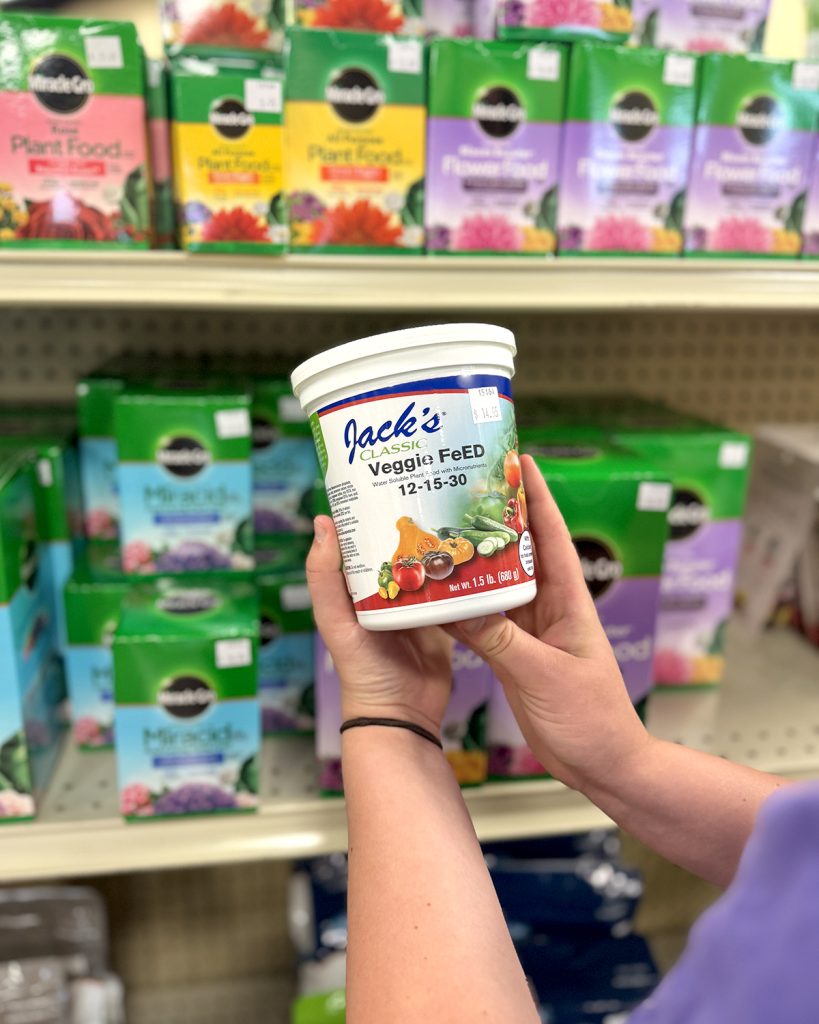
- Jack’s Classic Veggie FeED 12-15-30
- Hi Yield Tomato & Vegetable Food
*All products listed in this article are product lines we carry in store Colorful Seasons.