
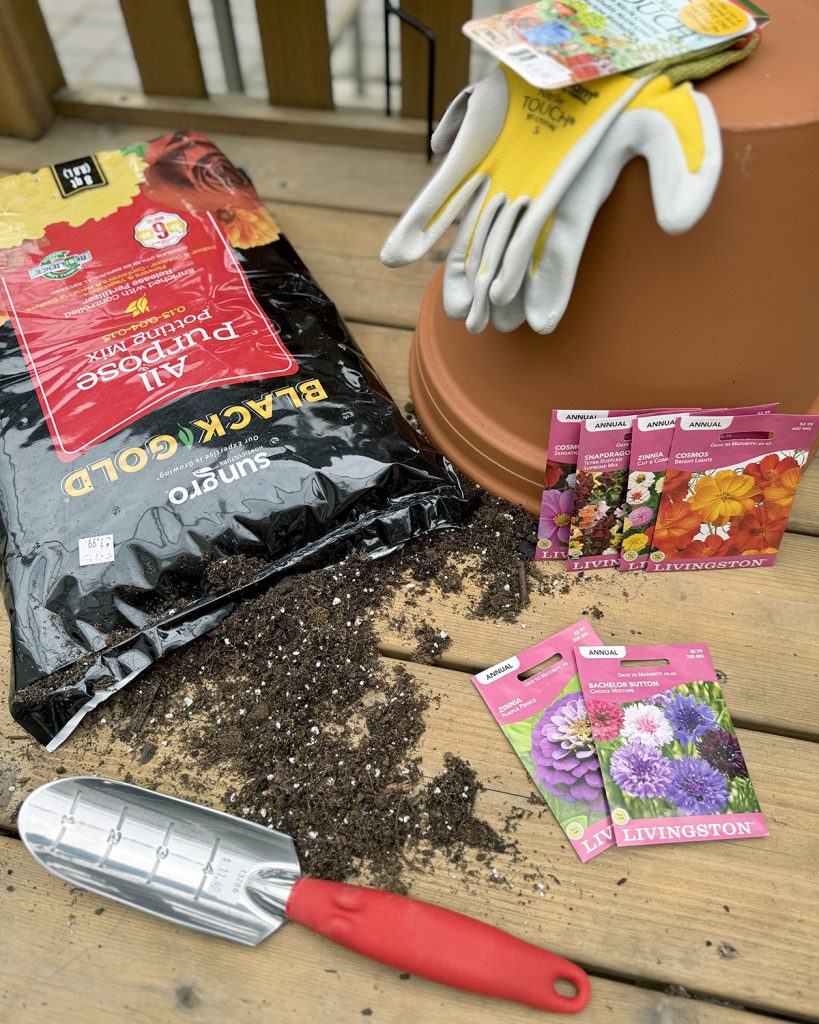
Cut Flower Starter Kit
Cut Flower Starter Kit
Cut flowers have been a popular topic in gardening over the past few years. The appeal (and reward) of growing a constant supply of fresh blooms is easy to understand. Contrary to popular belief, you don’t need sprawling acres to enjoy growing cut flowers. With a few tools, and a little planning, you can enjoy having a constant supply of blooms at your fingertips! Underlined items indicate products available at Colorful Seasons Garden Center.
Options for Planting
- Traditional garden beds: If you have the space – GREAT! Dedicating a garden bed will offer ample room for planting a variety of cut flowers.
- Raised beds: Are a great option for those with less space! Raised beds ensure good drainage and provide easy access for cutting.
- Large containers or pots: Perfect for patios, decks and are low commitment!
- Choose containers that are at least 12 inches deep to accommodate root growth.
- Ensure your containers have drainage holes! Large Terracotta pots provide a classic or upscale look without breaking the bank and aid in moisture management. Plastic pots are also an option. They come in a variety of sizes, colors and styles and are an affordable option.
Light, Soil and Temperature
Just like any plant, cut flowers need the right conditions to thrive and produce abundant blooms. Here’s what to keep in mind for light and soil.
Light
- Full sun is key. Most cut flowers thrive in at least 6-8 hours of direct sunlight per day. This is crucial for strong stems, vibrant colors, and flowering. Before you start, observe your planting location throughout the day to ensure it receives adequate sunlight!
- Some varieties can tolerate partial shade (4-6 hours of direct sun, ideally in the morning), especially during the hottest part of the day. However, flowering may be less abundant.
Soil
- Well-draining soil is essential! Soggy soil is the enemy of most plants. If planting in the ground amend a heavy clay soil with compost, sand, or other organic matter to improve drainage.
- Cut flowers benefit from nutrient-rich soil. Incorporate a compost blend into your garden beds or potting mix before planting. This provides essential nutrients for healthy growth and blooms.
- For Containers use a high-quality potting mix specifically formulated for containers. Avoid using garden soil in pots, as it can compact and impede drainage!
Temperature
Central MN Average Last Frost Date: The average last spring frost date typically falls around May 10th. It is best to plant after the chance of frost has passed.
General Safe Planting Time: A common guideline is to wait until around Mother’s Day weekend (the second Sunday in May) to plant most annual cut flowers. This timing usually minimizes the risk of damage from late spring frosts.
Consider Soil Temperature: For some flowers, especially those grown from seed directly in the ground, waiting until the soil has warmed up to a consistent temperature (around 50-60°F) can improve germination and early growth.
Starter Flowers
Here are a few cut flower favorites. You can choose to grow most of these from seed OR you can pick up packs of already established flowers at our greenhouse this spring.
- Zinnias: A quintessential cut flower! Zinnias come in an array of colors, shapes, and sizes. They are heat-tolerant, drought-tolerant once established, and incredible bloomers.
- Sow directly into ground or start indoors 4-6 weeks earlier using 4.5” plastic pots with a quality potting soil. Established packs of Zinnias that are ready to plant are also available in the greenhouse.
- Provide full sun and well-drained soil. Deadhead spent flowers regularly to encourage continuous blooming.
- Bachelor Buttons: These charming, daisy-like flowers come in shades of blue, pink, white, and purple. They are easy to grow from seed, attract pollinators, and have a lovely, slightly wildflower-like appearance.
- Care: Direct sow seeds in spring. Established packs are also available at the greenhouse in the spring.
- They prefer full sun and well-drained soil. They can tolerate some light shade. Deadheading spent flowers will prolong blooming.
- Snapdragons: These elegant flowers with their unique “snapping” blooms add vertical interest to bouquets. They are relatively easy to start from seed indoors and will bloom profusely.
- Care: Start seeds indoors 6-8 weeks before the last frost. Use 4.5” plastic pots with a quality potting soil. Transplant seedlings outdoors after the danger of frost has passed. Or purchased established packs in the spring from the greenhouse.
- Provide full sun and well-drained soil. Pinch back young plants to encourage branching and more blooms. Deadhead regularly.
- Cosmos: These delicate-looking flowers are surprisingly resilient and bloom in a wide range of colors, including pink, purple, white, orange, and yellow. They are easy to grow from seed and attract beneficial insects.
- Care: Direct sow seeds after the last frost or start indoors 4-6 weeks earlier using 4.5” plastic pots with a quality potting soil. Established packs are also available in the greenhouse if you prefer not to start from seed.
- They prefer full sun and well-drained soil. Deadhead spent flowers to encourage more blooms.
- Salvia (Sage): Many varieties of salvia produce beautiful flower spikes that are excellent for cutting and attract hummingbirds. Choose annual varieties for reliable blooming in our short season.
- Care: Purchase established packs from the greenhouse in the spring.
- Provide full sun and well-drained soil. Deadhead spent flower spikes to encourage more blooms.
Tips for a Successful Start
- Pinching: When young plants have a few sets of true leaves, pinch out the growing tip to encourage branching and more flower stems.
- Support: Tall or floppy varieties like Snapdragons and some Zinnias may benefit from staking or netting to keep stems straight.
- Watering: Water deeply and regularly, especially during dry periods. Avoid overhead watering, which can promote fungal diseases.
- Fertilizing: A balanced, all-purpose fertilizer applied a few times during the growing season can help boost growth and flowering.